Which ants have you got?
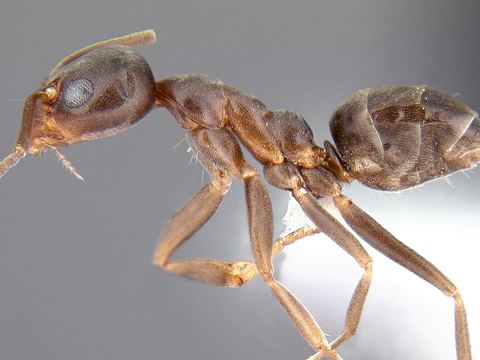
Colour is the first clue. DOC says Argentine ants are 2 to 3 mm long and honey-brown, while most other ants seen in New Zealand are black. Then look at how they're moving. Argentine ants often travel in trails five or more ants wide, packed close together, and they'll run straight up a tree.
We can't name every black ant from here, and you don't need to. What matters is whether you've got an ordinary trail to a food source, or something much bigger.
Is it an Argentine ant or a black ant?
| Argentine ant | Most other ants here | |
|---|---|---|
| Colour | Honey-brown | Black |
| Trail | Wide and crowded, five or more across | Usually a thin line to food |
| Where they turn up | Everywhere at once: cupboards, walls, trees, the deck | Around a spill, a window or a door |
| What we'd do | Leave the trail alone and get a pest business to look | Clean up the food and watch for a few days |
Why Argentine ants are a bigger job
Ordinary colonies mind their own business. DOC says Argentine ant nests cooperate with each other, building super-colonies that can stretch for hundreds of metres. So the ants on your bench may belong to something running under your fence and through three neighbours' gardens.
That's why a can of spray at the back door rarely settles it. DOC warns the wrong amount of pesticide could lead the colony to separate, which makes the ants harder to control. A treated section can also fill up again from next door.
They're a real household nuisance. Manaaki Whenua ranks them highly as one, getting into cupboards, sealed jars, electrical areas, behind walls and even beds. DOC adds that they're aggressive, and they can bite people.
Wet weather can push them inside, because they usually nest outdoors but may move in when it's wet. They also like honeydew, so check any trees and shrubs the trails lead up.
Where are they, and what are the rules?
DOC knows of Argentine ants in many parts of Auckland, Northland, Waikato, Bay of Plenty and Hawke's Bay, plus Wellington, Nelson and Christchurch. That isn't a full list, so a place that's missing doesn't mean you're in the clear.
Some regions have their own rules. Under Auckland's Regional Pest Management Plan, Argentine ants are under sustained control across the whole region, and no one may breed, distribute, release or sell them there. In Northland, the pest rules say no one may knowingly move material or equipment that may harbour Argentine or Darwin's ants without first taking suitable control measures. Check your own regional council's pest pages if you're moving soil or plants.
People spread them more than they spread themselves. DOC says potted plants carry the highest risk, along with garden soil, bark, building materials and camping gear.
What does an ant treatment involve?
A technician follows the trails first, to find where they start and which nests are feeding them. For most ants that's a short job. For Argentine ants it can mean walking the whole section.
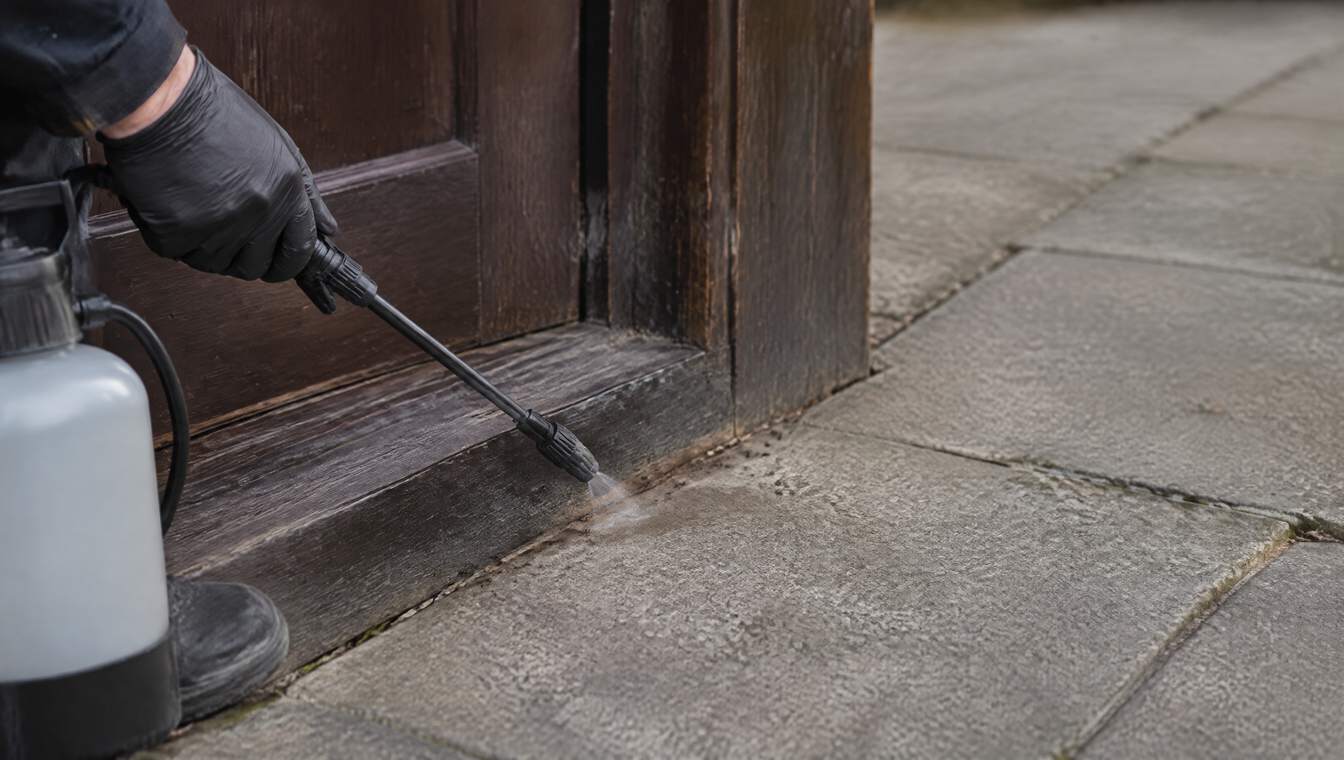
Treatment usually means baits, placed near established trails so that workers carry them back to the nest. That's why it pays to leave the trail alone beforehand. Some jobs add a barrier treatment around the house or inside wall gaps. A follow-up visit is common, because a colony can take time to fall away and new ants can arrive from next door.
With a big super-colony, one house may not be enough. DOC says larger ones may need a coordinated community response, so it helps to talk to the neighbours early.
What changes the size of the job
- Which ant it is, and how many nests are feeding the trails.
- How big the section is, and how much garden, bark and paving it has.
- Whether the neighbours have them as well.
- Ants inside walls, ceilings or electrical areas.
- Fish tanks, beehives or veggie gardens that limit what can be used nearby.
What you can sort out, and what you can't
You can
- Wipe up sweet spills and crumbs, and keep food in well-sealed containers.
- Rinse recycling and keep pet bowls clean.
- Find where the trail starts and where it's going, then photograph it.
- Leave a big trail undisturbed until you know what it is.
- Check potted plants, soil and bark before they come onto your place.
Leave to a pest business
- Baiting a colony, especially an Argentine ant one.
- Ants in walls or around wiring.
- Treatments that run along a boundary or across a section.
What to ask before you agree
- Which ant do you think this is, and why?
- Are you using bait, a spray or both, and what's each product's full name?
- Do I need to do anything about the trails before you come?
- Will you check the neighbour's side of the fence?
- What should we expect to see in the first few weeks?
- How long do kids and pets need to stay off treated areas?

What we'd try first
We'd crouch down and have a proper look. Black ants in a thin line get a clean-up and a few days to see what happens, and most of the time that's the end of it. Honey-brown ants, in wide trails, on more than one side of the house, get left alone: no spray, no boiling water. We'd tap Ants, say it might be Argentine ants, and mention if next door has them too.
Want someone to look at it?
Tell us what you've seen and your postcode, and a local pest business that handles exactly that calls you to talk it through.