Right now
Keep children and pets back, and don't spray, hose or poke the swarm. If someone has swelling around the lips or eyes, wheezing, trouble swallowing or a tight throat after a sting, call 111 straight away. For first aid advice, the National Poisons Centre is on 0800 764 766.
What is a bee swarm?
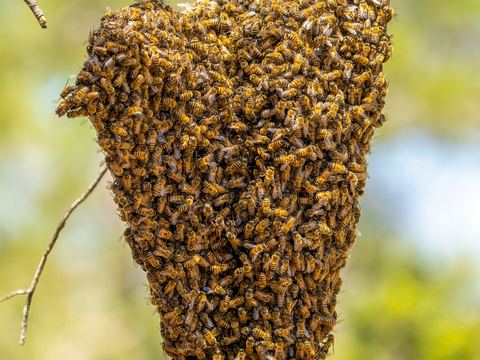
It's how honey bee colonies reproduce. Apiculture New Zealand says swarming is a natural part of the bee's reproductive cycle, with overcrowding a main trigger. The queen and roughly 5,000 to 20,000 workers leave the hive and cluster around her, usually in a round or oval mass, while they look for a place to start a new nest.
A swarm looks alarming and is usually calmer than it looks. Apiculture New Zealand says bees in a swarm aren't aggressive or inclined to sting unless provoked. They've got no nest to defend yet, so your job is simply not to provoke them.
When do swarms happen in New Zealand?
Apiculture New Zealand says the swarming season can begin as early as August and runs through to January. Warm weather and more flowers and pollen build the colony up, so a swarm on the fence in October is right on schedule. Our pest calendar shows what else is about.
What to do with a bee swarm
Move people and pets back
Close nearby windows and doors, and bring the dog inside. Tell anyone at home who has reacted badly to a sting.
Don't spray it
Apiculture New Zealand says spraying a swarm with insecticide can make the bees sick or kill them.
Take a photo from a distance
It helps the collector confirm these are honey bees, and see where they've settled.
Find a swarm collector
Apiculture New Zealand lists collectors by region for the North and South Islands, with names and phone numbers. Its page is in the sources at the foot of this guide. Start with the closest one.
Say where it is and how high
Tell them whether it's on a branch, fence or post, how high up it is, and roughly how big. Ask about any fee, as the list doesn't say.
Tell the neighbours
If the swarm's near a boundary, a quick word stops anyone reaching for the fly spray.
Is it a swarm, a colony in the wall, or something else?
| What you'll see | Who to call | |
|---|---|---|
| A swarm | A hanging cluster of bees out in the open | A swarm collector |
| Bees in a building | Bees going in and out of one gap in a wall, roof or chimney | A pest business |
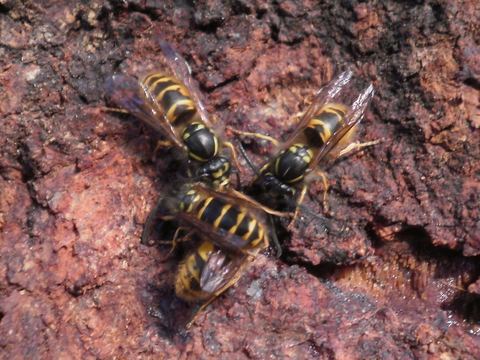
| Wasps | Slender, smooth, black and yellow, usually with a nest in the ground or a tree | A pest business |
| Bumblebees | Big, round and furry. They don't swarm: Apiculture New Zealand says only honey bees do | Beekeepers generally don't remove the nests, so ask a pest business if it's in the way |
How do you tell bees from wasps?
Apiculture New Zealand warns not to assume they're wasps, since the two can look similar. Bees have rounder, usually hairy bodies and feed on pollen and nectar, while wasps are usually slender and smooth. If they're hanging together in a clump, that points to a swarm. If they're flying in and out of the ground, think wasps, and keep clear.
When are bees a job for a pest business?
Once they've moved in. A colony living inside a wall, roof or chimney can't simply be collected from a branch, and that's the job to tell us about: tap Bees and say where they are. We mark those as urgent for the pest business, though we can't promise how quickly anyone will respond.
A swarm in the open is different, and it doesn't need us. Ring the beekeeper. Our bees page covers bees in buildings.
What if someone gets stung?
Health NZ says only honey bee stings need the stinger removed. Scrape it out as quickly as possible with your fingers, a credit card or the blunt side of a knife. Wash the area with soap and cold water, then apply an ice pack for 15 minutes. Most stings itch or hurt for 1 or 2 days, and the swelling may last a week.
Anyone who has had an anaphylactic reaction to a sting should always carry a kit with an adrenalin injection, a salbutamol inhaler and an antihistamine, which a healthcare provider can prescribe.

What we'd do with a swarm
We'd bring the kids and dog inside, take one photo and ring the nearest collector. It's a good call to make: a beekeeper gets a colony, and you get your fence back. We wouldn't call a pest business for a swarm, and we wouldn't try to shift it ourselves, however calm it looks.
Want someone to look at it?
Tell us what you've seen and your postcode, and a local pest business that handles exactly that calls you to talk it through.