A nest in the chimney or flue?
Don't light the fire until it's been checked and cleared. NZ Birds Online says starling nests have caused at least one death by blocking chimneys.
Which bird is nesting at your place?
| Nests in | Lays eggs | What you'll notice | |
|---|---|---|---|
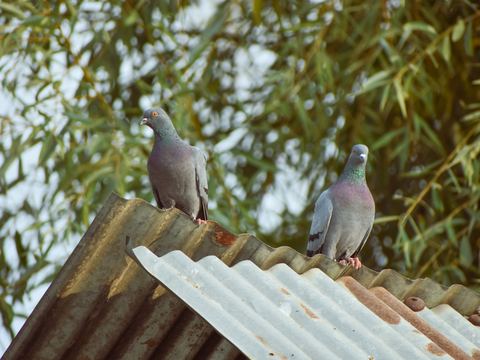
| Rock pigeon | Ledges on and in buildings, bridges and wharves | Any month, mostly spring and summer | Droppings on ledges, cars and paths |
| Starling | Cavities, including under the eaves | Mostly September and October | A noisy, smelly nest in the eaves |
| House sparrow | Eaves and other crevices | Late September to early February | Birds darting in and out of small gaps |
| Common myna | Cavities, eaves, even letter boxes | November to early February | Brown body, black head, bright yellow bill |
| Welcome swallow (native) | Cup-shaped mud nests on houses and bridges | Up to three broods, August to February | A mud cup on a wall or ledge |
Which birds live near you?
Rock pigeons run from Northland to Southland, mostly in towns, cities and farmland. Starlings live throughout New Zealand, and house sparrows everywhere except high mountains and bush.
Mynas are North Island only, north of 40 degrees south. If you're in Wellington or the South Island, the bird in your eaves is something else.
Why is a nest worth dealing with?
NZ Birds Online is blunt about starlings. Their nests under house eaves are noisy and smelly, may attract rodents, and are often infested with fleas and mites. Unexplained bites in a room under the eaves can be a reason to look up, and our flea page covers what comes next.
Pigeons are more about droppings. NZ Birds Online says their faeces can spread diseases such as salmonella, and can foul buildings, vehicles and footpaths.
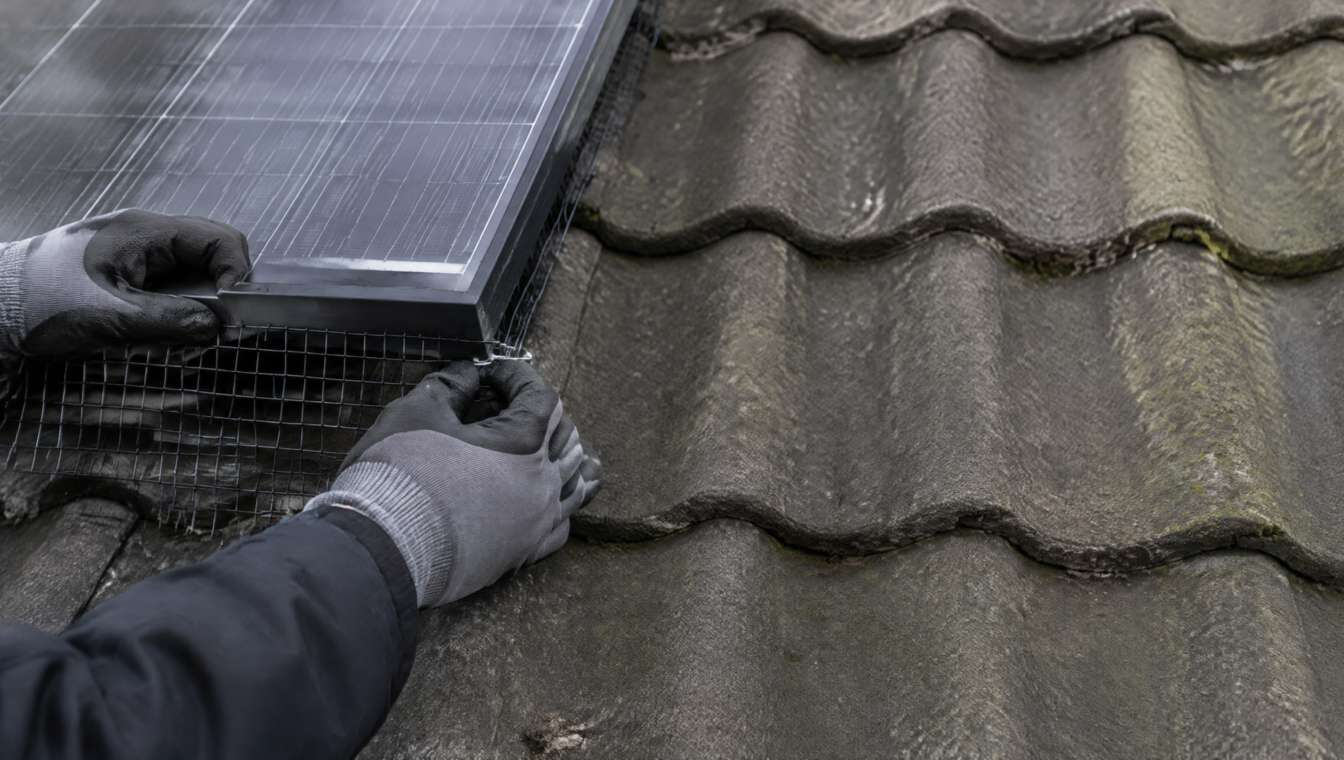
Solar panels add a newer problem. The gap underneath stays dry and sheltered, so birds carry nesting material in and the mess builds up where you can't see it.
Which birds does the law cover?
DOC says the Wildlife Act covers all native birds. Schedule 5 of the Act lists wildlife that isn't protected, and as of 25 June 2026 that list includes the mynah, rock pigeon, house sparrow and starling.
Native birds are different. The welcome swallow is native, and its mud nests are often on houses. Among gulls, Schedule 5 names only the black-backed gull. DOC says that without a permit it's an offence to catch, hunt, possess or hold an absolutely protected animal, so if a nest might belong to a native bird, leave it alone and ask DOC first.
What does bird proofing involve?
A technician starts by working out where the birds land, roost and get in, then checks the roof, eaves, gutters and ledges. The fix is mostly physical: mesh or wire over gaps, netting across the spaces birds use, spikes or wires on ledges, and mesh around the edge of solar panels.
Old nests and droppings usually come out first, so it's easy to see if birds return. In spring and summer, ask what happens to any eggs or chicks before work starts. If panels are involved, ask your solar installer whether anything fixed near them affects their warranty.
Height is the main thing that changes the size of the job. A two-storey house may need scaffolding, a long run of eaves with lots of small gaps takes longer than one vent, and heavy droppings add clean-up time.
What should a written quote cover?
- Which bird, and which parts of the house.
- What's being fitted, and how it's fixed to the roof or panels.
- Taking away old nests and droppings.
- What happens to any eggs or chicks.
- Ladders, scaffolding or other roof access.
- What any warranty covers, in writing.
What's yours, and what's for a pest business?
You can
- Stop feeding birds near the house, and keep pet food inside.
- Watch where they go in, and at what time of day.
- Photograph nests and droppings from the ground.
- Get any chimney or flue checked before the first fire of the year.
Leave to a pest business
- Anything on the roof or up a ladder.
- Mesh around solar panels.
- Clearing nests from eaves and ceiling spaces.
- Cleaning up heavy droppings.

Where we'd start with bird proofing
We'd work out which bird it is before anything else, from the ground, with a phone camera. If it's a pigeon, starling, sparrow or myna, tell us where they're getting in. If it's a mud cup stuck to the wall, that's likely a swallow, and we'd leave it be.
Want someone to look at it?
Tell us what you've seen and your postcode, and a local pest business that handles exactly that calls you to talk it through.