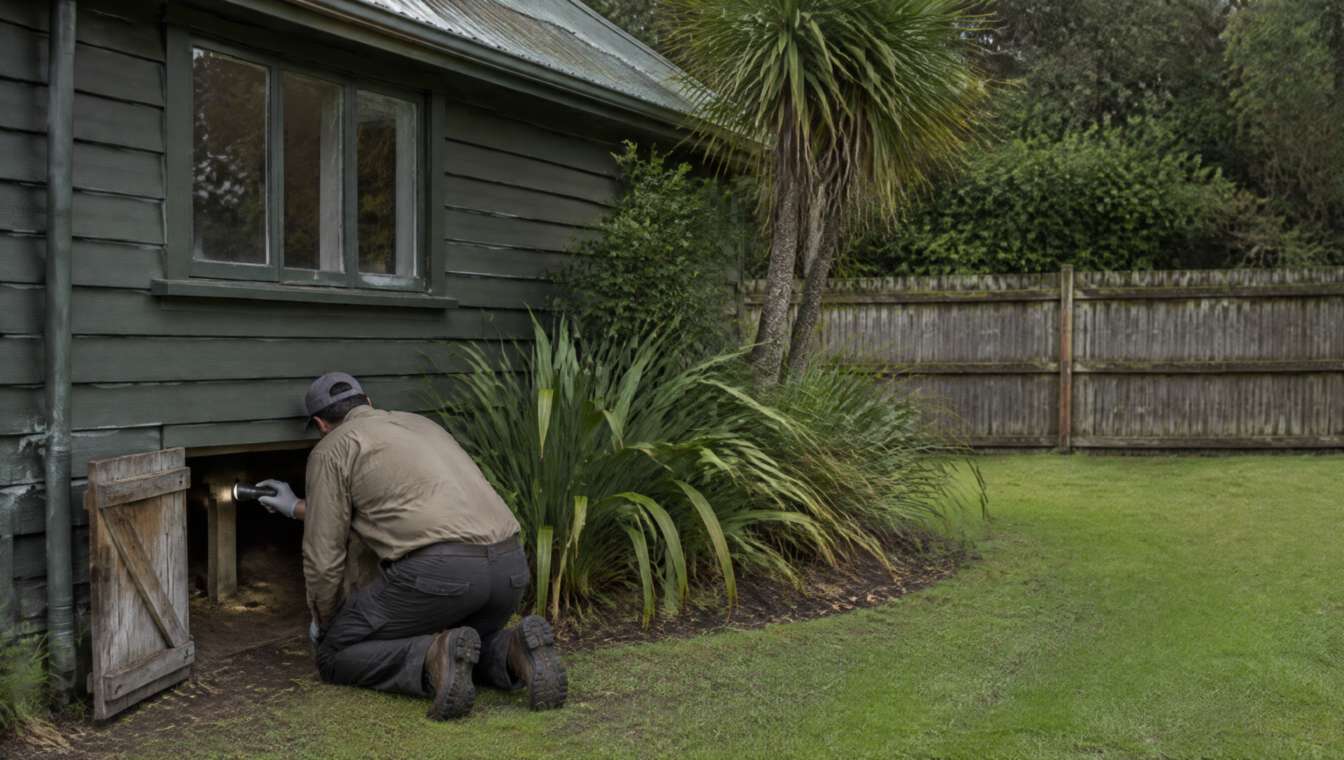
If you suspect termites or their damage
Don't disturb them, don't spray them and don't pull the timber apart. MPI says to call it immediately. Hawke's Bay Regional Council says the Australian subterranean termite is a Notifiable Organism and an Unwanted Organism, and that you have a legal obligation to tell MPI if you find it.
Are there termites in New Zealand?
New Zealand has three native termite species. MPI says they aren't considered destructive and don't form large colonies. They're not what this page is about.
The one MPI watches for is the Australian subterranean termite. Its October 2017 brochure says it's occasionally found here, and that MPI wants to identify any populations and eradicate them. Past finds have been dealt with as biosecurity responses. MPI reported in August 2014 that termites found at Coatesville in 2007 were eradicated, and that elimination was declared at Pukekohe after a 2010 find. Hawke's Bay Regional Council lists Point Wells, Drury, Māngere, Walton and Omaha as eradication sites.
Nothing we've read says these termites are established here. We also won't claim New Zealand has none, because the latest official papers we could read date from 2014 and 2017. What's clear is what to do if you think you've seen them.
What would the signs be?
MPI says you're likely to see mud before you see an insect: mud packed into gaps in timber, or mud tunnels up walls or across open ground.
Flying termites are attracted to light, so MPI says they may be found around windows or inside the house on warm, humid evenings. Hawke's Bay Regional Council says winged Australian subterranean termites usually appear from November to February.
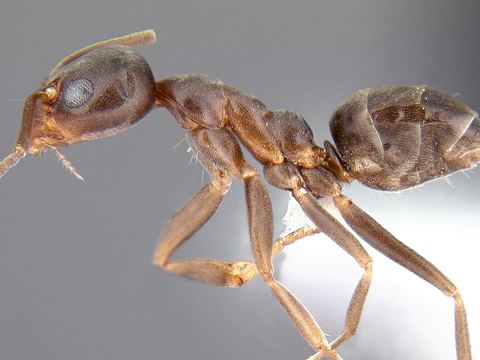
Up close, MPI describes the insect as looking like a white ant, but slightly larger and with no small ant-like waist. Soldiers are 5 to 7 mm long with brown heads and long jaws, and workers are all white.
Termite, ant or borer?
| Termite (report it) | Ant | Borer | |
|---|---|---|---|
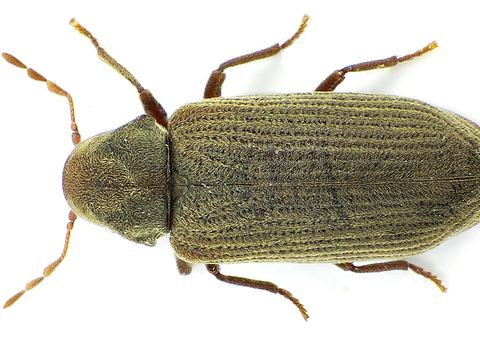
| Body | White or pale, no narrow waist | Narrow, pinched waist | Small brown beetle |
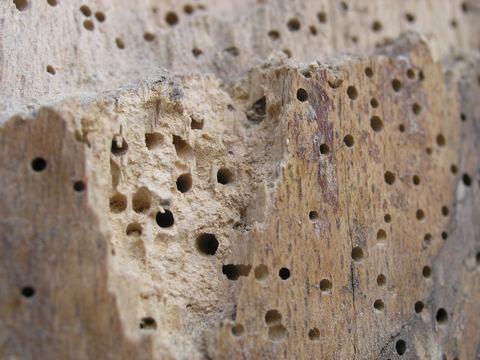
| In the timber | Mud packed into gaps | Usually nothing | Round or oval holes, with dust below |
| On walls or ground | Mud tunnels | Trails of ants | Beetles near holes in summer |
| Who to call | MPI | A pest business, if they're a problem | A pest business |
Where would they come from?
MPI says these termites are most likely to be linked to imported wood products, such as Australian hardwood railway sleepers used in landscaping. If you've got old sleepers in a retaining wall or garden edge, that's a sensible place to glance at. Look, but leave them in place.
What to do if you think you've found them
Stop
Leave the timber and mud exactly as they are. Disturbing them is the one thing MPI specifically asks you not to do.
Note what you saw
Write down where it was and when, and take photos without touching anything.
Call MPI
Do this first, before you ring a builder, a neighbour or a pest business.
Do what MPI tells you
Hold off on sprays, repairs or moving timber until you've heard from them.
Why isn't this a job for a pest business?
Because the first step belongs to the Government. A suspected find is a biosecurity report, and if a business offers to treat suspected termites without mentioning MPI, stop and ring MPI yourself. That's also why there's no termite option when you tell us what you've seen. We'd only be sending you the wrong way.
If what you've found turns out to be holes and dust rather than mud, that's a different story. Borer is the common timber pest in New Zealand homes, and borer treatment is a normal job.

If we found mud in the timber
We'd step back, take a couple of photos and ring MPI, even if we felt silly doing it. It may well turn out to be nothing. We'd rather make a call that wasn't needed than disturb something MPI wanted left alone, and we wouldn't ring a pest business about it until MPI had told us what it was.
Want someone to look at it?
Tell us what you've seen and your postcode, and a local pest business that handles exactly that calls you to talk it through.