If someone is bitten
Clean the bite with antiseptic or warm soapy water, and hold ice wrapped in a cloth against it, never straight on the skin. See a healthcare provider if it turns very red, painful or blistered, or looks infected. You can call Healthline any time, and the National Poisons Centre is on 0800 764 766.
How to tell it's a white-tail
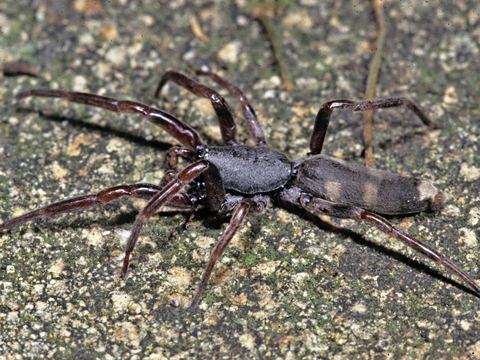
Te Papa describes them as slender and typically greyish, with banded legs and usually a cream-white mark on the tail tip. A fully grown one has a leg span of a little over 3 cm. New Zealand has two species, and Te Papa says you'd need a microscope to separate them.
They don't build webs. They wander at night hunting, and they're strongly tied to towns and houses here, so walls and ceilings are the usual place to meet one.
Why it's in your house
Food, mostly. White-tails hunt other spiders, and Te Papa says black and grey house spiders are their usual meal. They pluck at a web to mimic trapped prey, then strike when the owner comes to look.
You'll see more of them through late summer and autumn. Te Papa suggests that white-tails seen indoors around March may be males out looking for females.
How worried should you be?
Not very. Health NZ says a bite causes pain, swelling, redness, itchiness and a burning feeling that go away with no long-lasting effects, and that white-tails don't cause skin damage or ulcers. Asked directly whether the venom is necrotising, Te Papa says no, while noting that infection of a bite or wound can be an issue. That's why keeping a bite clean matters.
Around the house
You can
- Shake out clothes, towels and bedding left on the floor.
- Fit a sealed door strip on any gap you can see daylight through.
- Clear old webs: fewer house spiders means less to hunt.
- Fill the gaps around pipes where spiders come in.
Leave to a pest business
- A general treatment if spiders of every kind keep turning up.
- Working out why the house has so many spiders in the first place.

Our take on the white-tail spider
One white-tail on the bedroom wall isn't worth paying anyone for. If you're finding them every week, the real story is usually the house spiders they're following, and that's worth a chat with a pest business. Tap Spiders and tell them what you're seeing.
Want someone to look at it?
Tell us what you've seen and your postcode, and a local pest business that handles exactly that calls you to talk it through.