Before anything else
Keep children and pets well away and leave the nest alone. If someone has swelling around the lips or eyes, wheezing or a tight throat after a sting, call 111 straight away. The National Poisons Centre on 0800 764 766 gives first aid advice, any time.
Which wasp have you got?
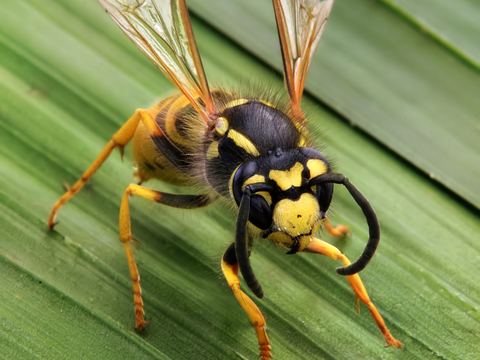
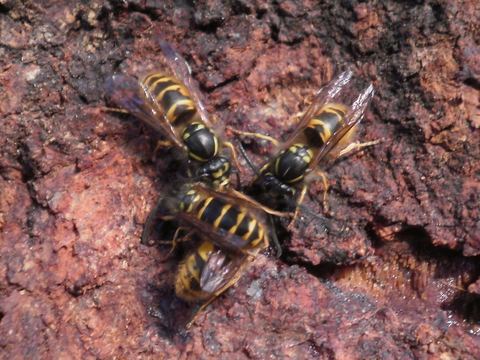
German and common wasps are the two you're most likely to meet. They look almost identical: black and yellow, and living in large colonies. The nest is the easier clue, because DOC says German wasp nests are grey and common wasp nests are brown. Both usually sit in the ground, or in clay-covered nests in trees.
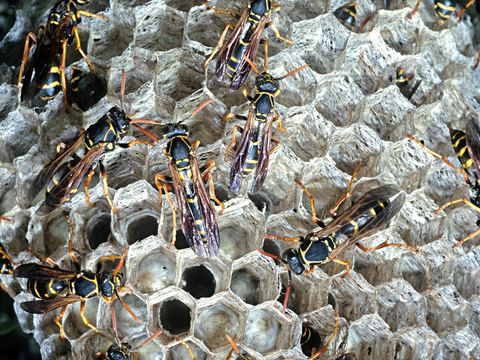
Paper wasps are smaller, and the Bay of Plenty Regional Council describes them as less aggressive. Asian paper wasps turn up in the North Island and the top of the South Island, while Australian paper wasps stay in the north of the North Island. Their nests hang in the open, so you can usually see them.
Is it a German wasp or a paper wasp?
| German or common wasp | Paper wasp | |
|---|---|---|
| Size | Stout and solid | Smaller, slimmer |
| Nest | Hidden, usually in the ground, or in a tree | Open comb, hanging under eaves or branches |
| Temper | Defends the nest hard | Less aggressive, but still stings |
Why late summer feels worse
A long, dry, hot summer lets wasp numbers build, and a University of Auckland professor said exactly that about the 2025 season. Older, bigger nests have more defensive workers ready to sting, which is why a nest you first notice in March can be much bigger than it looks from the entrance.
If a colony survives the winter it can keep growing. DOC says the largest nest recorded in New Zealand was at Waimauku, near Auckland.
Who deals with a nest on your land?
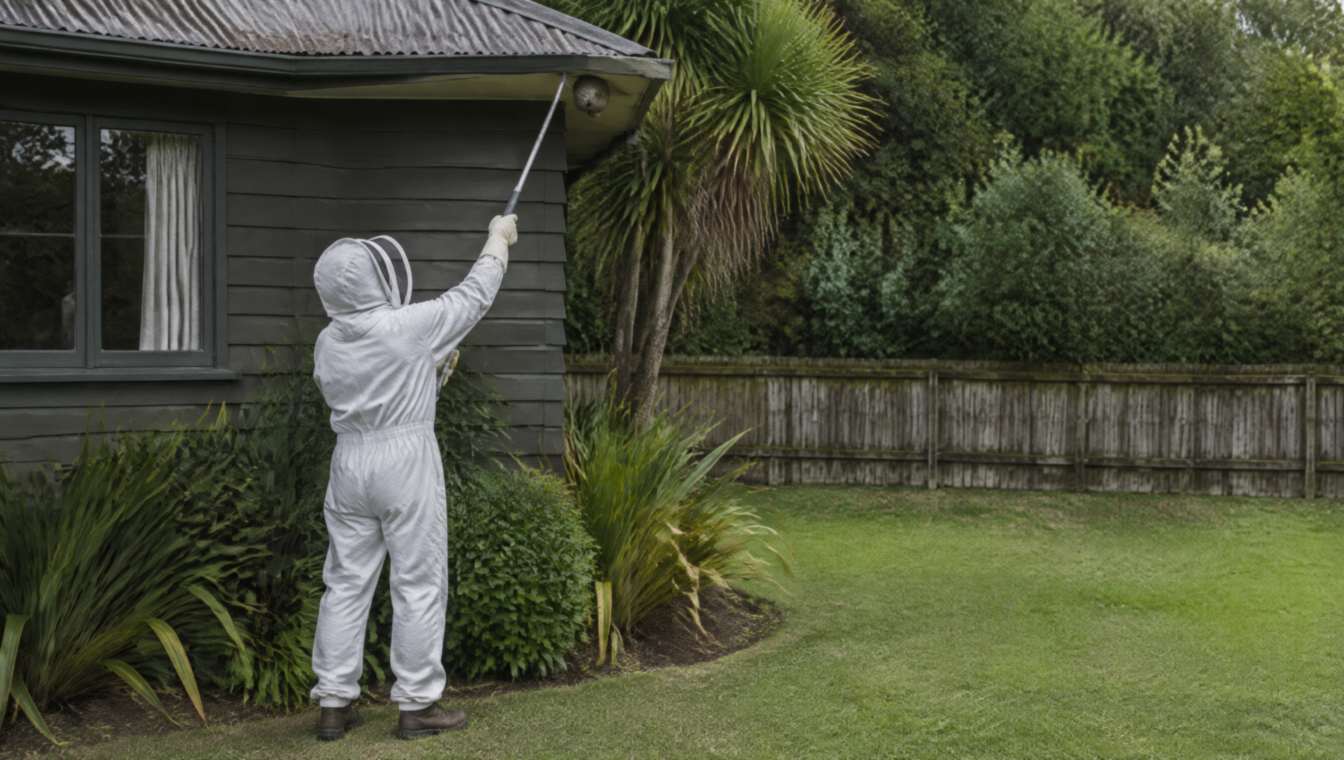
Usually you do, which in practice means ringing a pest business. Councils generally look after nests on council land, and owners look after nests on their own property. Waikato and the Wellington region have their own rules, where a written direction can require you to deal with a nest, so check your regional council's pest plan.
Most jobs come down to where the nest sits. A nest in a wall or ceiling takes more getting at than one in open ground, and a business will want to know how close it is to doors and paths.
What the pest business will ask
- Where the nest is: in the ground, in a wall or ceiling, or up a tree.
- How close it is to doors, decks and where kids play.
- Whether anyone at home has had a bad reaction to a sting.
- What's easy to reach, and whether a neighbour's fence or hedge is in the way.
While you wait
You can
- Keep windows near the nest shut and food covered outside.
- Work out where the wasps go in and out, from well back.
- Take one photo from a distance for the pest business.
- Tell the neighbours if the nest is on the boundary.
Leave to a pest business
- Treating the nest, wherever it is.
- Any nest in a wall, ceiling or the ground.
- Anything up a ladder.
Worth asking before they start
- Which product will you use, and what's its full name?
- How long should people and pets stay clear afterwards?
- Does the nest stay in place, or come out once the colony has gone?
- What happens if wasps are still flying a few days later?

Where we'd start with wasp nest removal
We'd get everyone inside, take a photo from a long way back, and tap A wasp nest with where it is. The can of fly spray stays in the cupboard: it won't reach the colony, and a stirred-up nest is the last thing you want next to the back door.
Want someone to look at it?
Tell us what you've seen and your postcode, and a local pest business that handles exactly that calls you to talk it through.