If someone has been bitten
Call 111 in an emergency. For a suspected katipō or redback bite, clean it, hold ice wrapped in a cloth against it, put no pressure on the bite and avoid alcohol. Get medical help straight away if symptoms get worse. The National Poisons Centre on 0800 764 766 gives first aid and bite advice.
Which spider are you finding?
| White-tail | Grey or black house spider | Katipō or redback | |
|---|---|---|---|
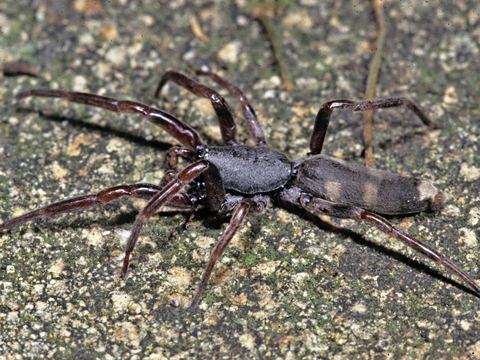
| Looks like | Slender and grey, with a pale mark on the tail tip | Dark and sturdy, usually close to its web | Small and black, often with a red stripe |
| Where it turns up | Walls and ceilings, roaming at night | Untidy webs around window frames and eaves | Katipō on sandy beaches, redbacks only in Central Otago |
| Worth a pest business? | Not for one. Maybe if you're finding them every week | Yes, if the webs keep coming back | Not on a beach. In Central Otago, a redback beside the house is worth a call |
When is it a job, and when isn't it?
Most houses have a few spiders. Eaves, windows and outdoor lights give them shelter and insects to eat, and one in the corner of a room isn't worth paying anyone to deal with.
It turns into a job when the numbers do: webs back within weeks of brushing them down, spiders in the bedrooms most nights, or a run of white-tails. White-tails hunt other spiders, so seeing plenty of them usually means there are plenty of house spiders nearby as well.
Is it a katipō or a redback?
Probably not, unless you're at the beach or in Central Otago. Health NZ calls these two the only venomous spiders in New Zealand, and only adult females can bite people. Katipō live among grasses and driftwood on sandy beaches, not in ceilings, and Te Papa says the species is classed as Absolutely Protected under the Wildlife Act. One on the beach is one to leave alone.
Health NZ says redbacks are present only in Central Otago, and bite only when disturbed or trapped in clothing. Elsewhere, a small black spider around the house may well be a black cobweb spider, which Te Papa says is common around homes. Take a photo from a safe distance rather than picking it up.
A big black spider under a log is a different story again. Te Papa says black tunnelwebs are often found under logs and rocks, so put the log back and leave it be.
Why do spiders come back after a treatment?
A treatment deals with the spiders and webs there now. It can't stop new ones arriving, because young spiders drift in on silk threads and males go wandering for mates. Te Papa says that wandering is noticeable through summer, especially late summer and early autumn, and some of those males stray indoors.
So treatment is part of the answer, never all of it. Fewer insects around the house means less for spiders to eat, which is why outdoor lights and gaps matter as much as whatever goes on the walls.
What does the job usually involve?
Expect questions first: what you're seeing, where and how often. Then the technician usually walks around the eaves and window frames, and checks the subfloor (the space under a raised floor) and the ceiling space.
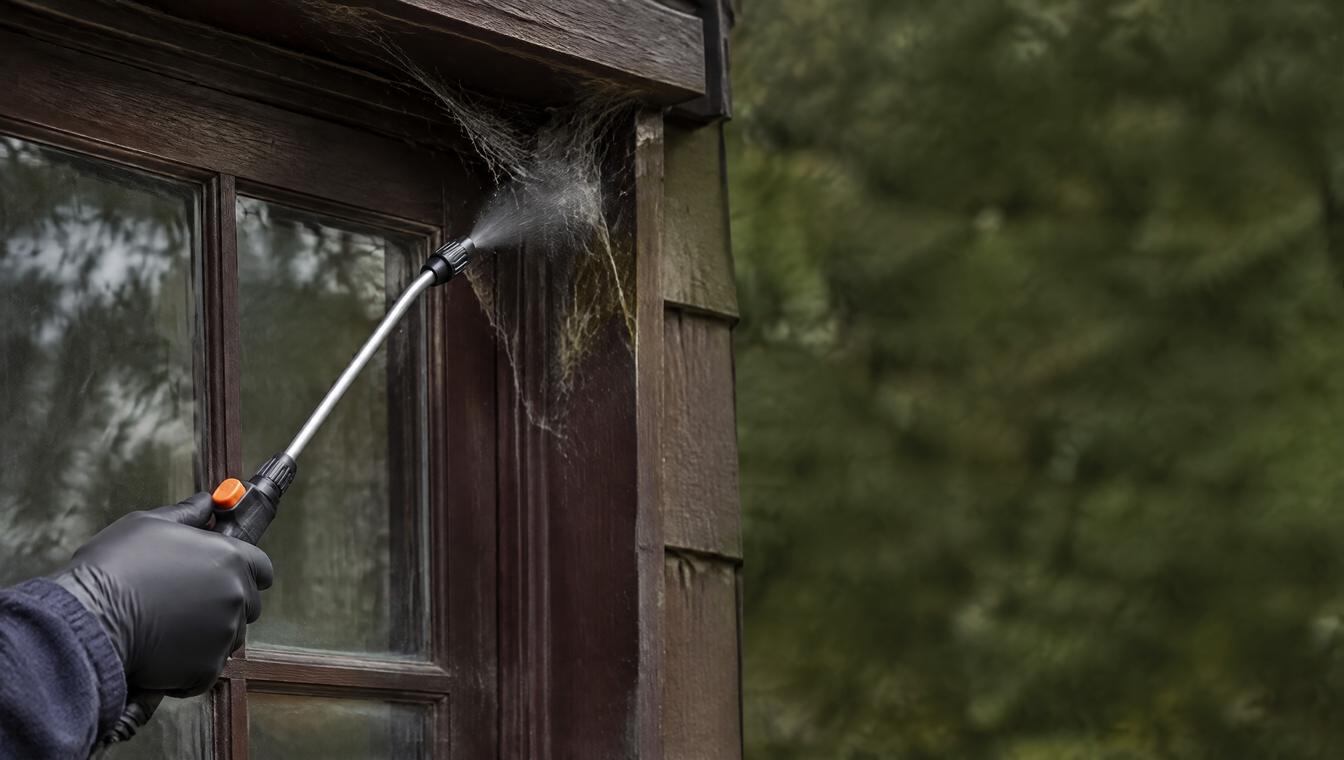
Treatment is mostly a spray around the outside of the house and the places spiders shelter, sometimes with a dust puffed into hidden gaps. Many businesses brush webs down first, so anything new is easy to spot. If numbers climb again, ask about a follow-up visit.
What makes the job bigger or smaller?
- How high the eaves are, and how easily the gutters can be reached.
- Whether it's the outside only, or inside and the ceiling space too.
- Subfloor access, especially if it's low or tight.
- How close bush, hedges or a woodpile sit to the walls.
- How long the webs have been building up.
What's yours and what's theirs
You can
- Brush down webs with a long-handled broom.
- Keep woodpiles and garden rubbish away from the walls.
- Swap or shield outdoor lights that draw insects to the windows.
- Fill gaps around pipes, and fit strips to gappy doors.
- Shake out shoes and clothes left on the floor.
Leave to a pest business
- Treating the eaves, the subfloor and the ceiling space.
- Anything on a ladder or the roof.
- Working out why numbers are so high.
- Any spider that worries you: photograph it, don't handle it.
What to ask before they start
- Which product will you use, and can I see its safety data sheet?
- Are you treating inside, outside or both, and why?
- How long should people and pets stay out of treated areas?
- We've got kids, pets and a veggie garden: what precautions do you suggest?
- How long do results usually last here, and is any warranty written down?
- Do you hold the New Zealand Certificate in Pest Operations (Level 3), or work under someone who does?

Where we'd start with spider control
We'd brush down every web we could reach, sort out the outdoor lights and the woodpile, and give it a few weeks. If the webs are back by then, or spiders are still turning up in the bedrooms, a treatment is worth it. Tell us what you're finding and where.
Want someone to look at it?
Tell us what you've seen and your postcode, and a local pest business that handles exactly that calls you to talk it through.