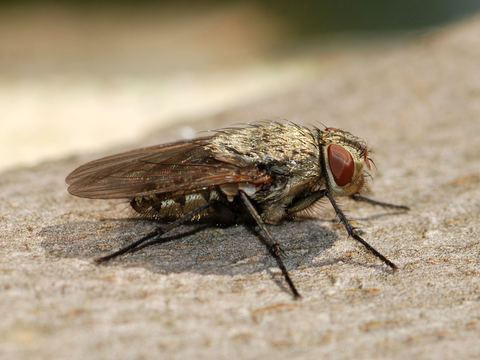
Which fly have you got?
| What you'll see | Where to look | Who deals with it | |
|---|---|---|---|
| House fly | Grey flies landing on food and benches | Bins, compost, pet waste, manure | You first, then a pest business if numbers stay high |
| Blowfly | Big, shiny, loud flies, often a sudden burst | A bin, or something dead in a ceiling or wall | You, or a pest business if the source is hidden |
| Cluster fly | Slow flies gathering at windows in autumn | Ceiling space and wall gaps | A pest business, if it happens every year |
| Small fruit fly | Tiny flies around the fruit bowl | Old fruit, bins, food left out | You |
| Sandfly | Tiny biting flies near water or bush | Beaches, lakes, rivers and swamps | Nobody: cover up |
Why do flies build up so fast?
Health NZ says a fly's reproduction cycle takes about a week, so a bin left for a fortnight can turn over a full generation. That's why the source matters more than the flies in the air.
It's also why house flies are worth taking seriously around food. PMANZ, the pest industry's association, says they can carry over 100 different kinds of germs, most of which can cause disease.
Why is there a sudden burst of big flies indoors?
A burst of blowflies in a clean house usually means something has died nearby: a rat in the ceiling, a bird in a wall, or a possum in the roof. A smell or a stain on the ceiling helps narrow it down. Once the source is gone, the flies stop too. If you've been hearing noises up there, start with rats and mice or possums.
Why are flies gathering at my windows in autumn?
That's the classic sign of cluster flies. A pest business owner told RNZ in 2022 that they're most noticeable in autumn as the weather cools, and that they aren't a filth fly. RNZ reported rural homeowners in Wairarapa and Canterbury dealing with huge numbers that year.
They shelter in ceiling spaces and wall gaps, so the flies at the window are usually the visible edge of a bigger group. Most people vacuum them up and get a treatment if it happens every autumn.
What about a fly you can't identify?
The small flies around a fruit bowl are ordinary, and PMANZ says they favour moist decaying fruit or food left sitting for several days. Exotic fruit flies are a different matter. Biosecurity New Zealand says their maggots feed inside fruit, causing it to rot.
If you think you've found one, photograph it, capture it if you can, and call MPI. That's a report, not a pest job.
What does fly control involve?
A pest business looks for the source before anything else: bins, compost, drains, animal waste, or a dead animal somewhere out of sight. Without that, a treatment only buys time.
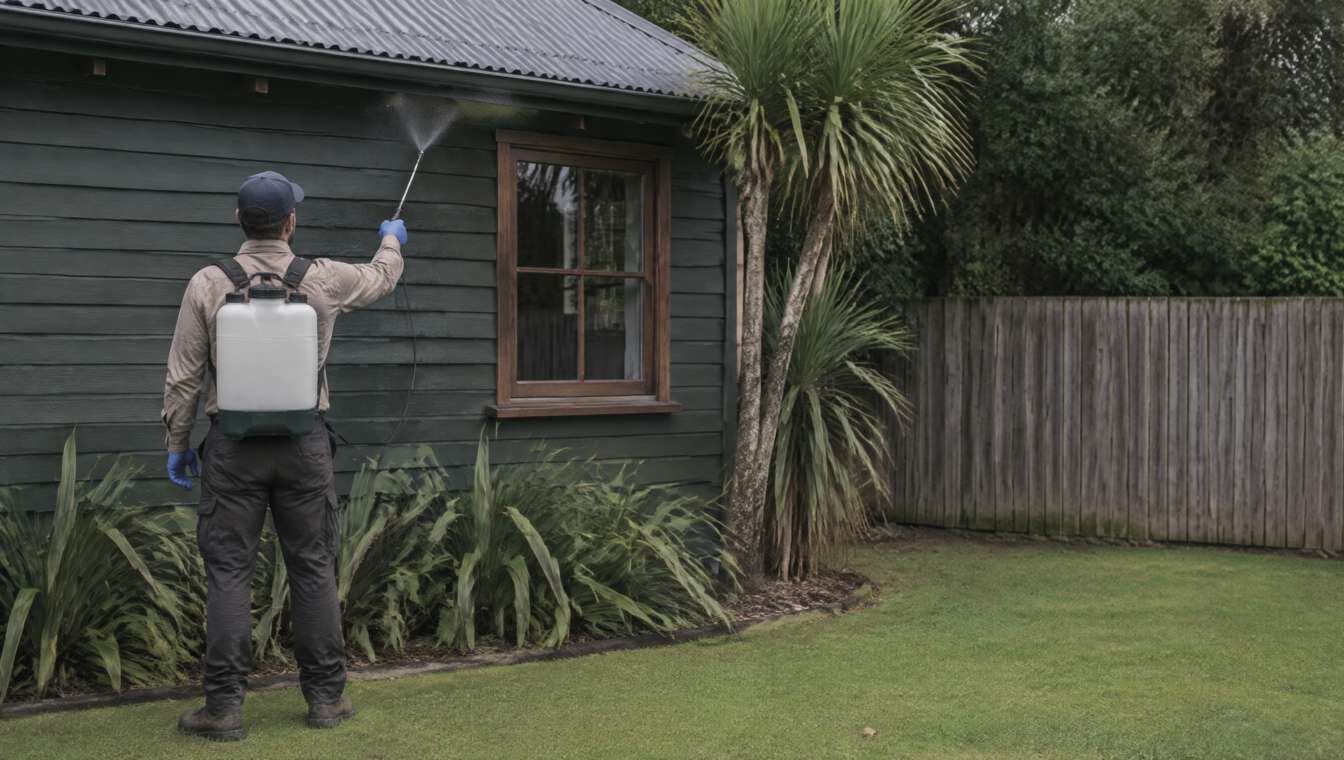
Health NZ's pest chart lists sprays on walls, ceilings, window frames and vegetation near rubbish containers as a treatment for flies. For cluster flies, the work usually moves to the ceiling space and the gaps they use. Rural sections, animals next door and how much of the house needs treating are what make the job bigger or smaller.
What can you do yourself?
You can
- Keep bin lids tight, and empty them at least weekly.
- Clean up pet waste promptly.
- Fit fine mesh screens to doors and windows.
- Keep fruit in the fridge, and clear fallen fruit outside.
- Cover compost, and keep it away from the house.
Leave to a pest business
- Finding and reaching something dead in a ceiling or wall.
- Treating ceiling spaces for cluster flies.
- Any treatment on walls, eaves and window frames.
What should you ask a pest business?
- Which fly do you think this is, and where's it coming from?
- What will you treat, and which product will you use?
- How long should people and pets stay clear of treated areas?
- We've got food gardens and animals nearby: what precautions do you suggest?
- What results should we expect, and for how long?

What we'd try first
We'd give it one clean week: bins sealed, pet waste gone, fruit in the fridge, and the screens checked. If flies are still coming, or they're big and sudden, or they're massing at the windows in autumn, tap Not sure what it is and describe them.
Want someone to look at it?
Tell us what you've seen and your postcode, and a local pest business that handles exactly that calls you to talk it through.