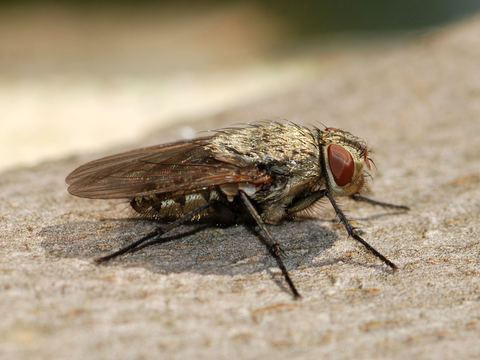
How do you know they're cluster flies?
The behaviour tells you more than the fly does. Cluster flies are dark and sluggish, and they turn up in numbers, often at sunny windows, in ceiling spaces and around window frames. They're slow to take off, and you'll find them drowsy or dead along the sill.
1News reported them in homes across Wairarapa and Canterbury in April 2022, after warm, wet weather, and said they're found more often in rural areas.
Cluster fly or house fly?
| Cluster fly | House fly | |
|---|---|---|
| Moves | Slowly, often drowsy | Quick and busy |
| Where you see them | Windows, roof spaces, wall gaps | Kitchens, food, rubbish |
| Feeds on | Worms, 1News reported | Rubbish, manure and food |
| What helps most | Blocking entry points | Rubbish and manure gone, screens fitted |
Could it be something else?
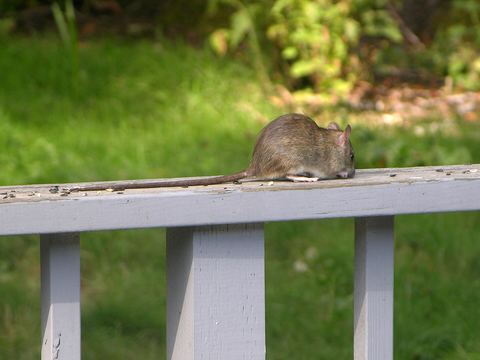
A sudden burst of big flies in one room, close to a smell, can mean something has died in the wall or ceiling. That's a different problem, and our page on rats and mice is the place to start.
If you're seeing quick, busy flies around food or bins, look at our fly control page instead.
Why are they in your house?
They're after shelter, not food. A parasitologist told 1News in 2022 that they head indoors in winter to hibernate. Gaps around eaves, vents and window frames are what let them in, and a warm day can stir them up again.
What actually helps?
Keep them out. The same parasitologist said the answer comes back to blocking any entrance points, and 1News suggested vacuuming up any that get inside.
He also said insecticide usually doesn't seem that useful on them, because they're so full of fat. A pest business can still treat a roof space or outside walls, but ask what to expect before you agree to it.
What we couldn't confirm
We couldn't read an official New Zealand fact sheet on cluster flies. What's here comes from that 2022 news report, plus Health NZ's general fly advice about rubbish, manure and screens. We haven't found Health NZ saying anything about cluster flies in particular, so we won't tell you whether they carry any health risk.
What you can do yourself
You can
- Seal gaps around window frames, eaves and vents.
- Fit screens to windows and doors you leave open.
- Vacuum up the flies, and empty the vacuum outside.
- Check the ceiling space, if you can get there without climbing anything risky.
Leave to a pest business
- Finding entry points high on the house.
- Treating roof spaces or outer walls, if it suits your place.
- Ruling out a dead animal or another cause.

What we'd tell a friend
Grab the vacuum, then spend a dry weekend on the gaps. That's what the advice comes down to, and it'll help with next autumn as well. If the numbers are bad enough that you can't use a room, tap Not sure what it is, mention cluster flies, and ask what a treatment can realistically do.
Want someone to look at it?
Tell us what you've seen and your postcode, and a local pest business that handles exactly that calls you to talk it through.