Which cockroach have you got?
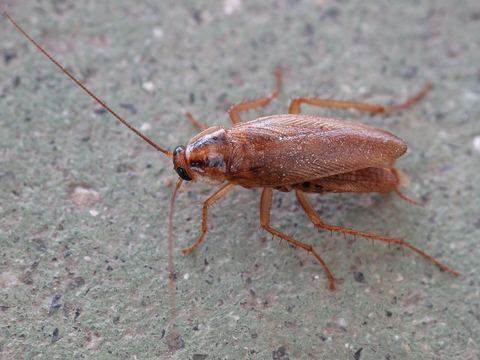
Health NZ names the two biggest cockroach pests here: the German cockroach and the American cockroach. They have different habits, so the most useful thing you can do first is get a good look at one, or a sharp photo.
Is it a German or an American cockroach?
| German cockroach | American cockroach | |
|---|---|---|
| Size | 12 to 15 mm | 35 to 40 mm |
| Colour | Amber, with two dark stripes running lengthways | Reddish brown, with a pale yellow border behind the head |
| Where you'll see it | Kitchens, under sinks, in cupboards, drawers and appliances | Roof, wall and subfloor spaces, and around drains and rubbish |
| What it usually means | They're breeding in the kitchen | They're living around the house and wandering in |
One cockroach, or a problem?
A single big cockroach on a warm night may be a visitor. A native one in the woodpile isn't a job at all: Health NZ says most native cockroaches aren't dangerous and are very important to the environment.
Small ones in the kitchen are another story. Look for droppings, smears, shed skins and empty egg cases under the sink and at the back of drawers. If you're seeing cockroaches out in the open during the day, that often points to a large population.
Why they settle in
Health NZ says cockroaches thrive in warm, damp conditions, and that you'll often find them inside walls, behind appliances and in cupboards. In most houses that means behind the fridge, around the dishwasher and near the hot water cylinder. There's more on what to check in our kitchen guide.
German cockroaches usually reach a new place as stowaways, in cardboard boxes or crates of food and drink. So a spotless kitchen can still get them, and a shared wall or a busy food shop downstairs can bring them closer.
What does cockroach control involve?
An inspection comes first. Health NZ describes sticky board traps for monitoring numbers, and where those traps fill up shows where the cockroaches are living.
For German cockroaches, expect baits placed where they feed and shelter, sometimes with a residual spray (one that keeps working on the surface after it dries) in their hiding places. Health NZ says to employ a trained, qualified operator to apply baits, and that insecticides do the most good where cockroaches hide during the day and pass through at night.
American cockroaches are more about where they're coming from, so a technician will likely look at the roof, the subfloor, drains and rubbish areas.
Either way, plan on a follow-up. A female German cockroach carries an egg case holding 30 to 48 eggs, and those can hatch after the first visit.
What makes the job bigger or smaller
- How many rooms they've reached beyond the kitchen.
- Clutter, stored cardboard and appliances that are hard to pull out.
- Living in a unit, where walls and pipes are shared.
- Damp: leaking taps, wet subfloors and slow drains.
- Food businesses or rubbish areas close by.
What helps, and what to leave
You can
- Clean often, especially the kitchen and anywhere food gets eaten.
- Keep living areas dry, and fix dripping taps.
- Take rubbish and food waste out promptly.
- Seal gaps in walls and foundations.
- Unpack cardboard boxes as they arrive, and get rid of them.
Leave to a pest business
- Placing baits inside cupboards and around appliances.
- Residual treatments in cracks and wall gaps.
- Tracking down where they're breeding.
Renting, or living in a unit?
If you rent, tell your landlord or property manager early. Tenancy Services puts pests at the start of a tenancy on the landlord, and upkeep that doesn't encourage them on the tenant. When nobody caused the problem, it's unclear who's responsible, and the two often share the bill.
It also says landlords should take responsibility if a house needs fumigating, though a tenant whose lack of cleanliness caused the problem could be responsible.
In a block of units, one treated kitchen may not hold if cockroaches are moving between homes. Let the body corporate know, so the neighbours can be looked at too.
What to ask the pest business
- Which cockroach is it, and how sure are you?
- What will you use, and can you give me its full name and safety data sheet?
- Should I stop using shop sprays while baits are out?
- What do I need to empty or clean before you arrive?
- Is a follow-up visit included, and when would it happen?
- What should I tell you about food preparation areas, pets and fish tanks?

How we'd play it
We'd catch one in a jar, or get a sharp photo, and check it against the table. Small and amber in the kitchen means we'd put the can of spray down and tap Cockroaches, because that's a job for a plan and a follow-up visit. A big one on a warm night gets a look at the door seals and not much more.
Want someone to look at it?
Tell us what you've seen and your postcode, and a local pest business that handles exactly that calls you to talk it through.