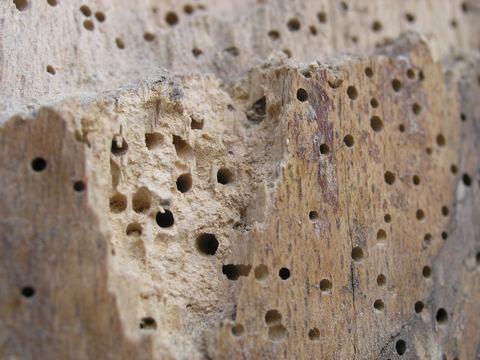
Is it borer?
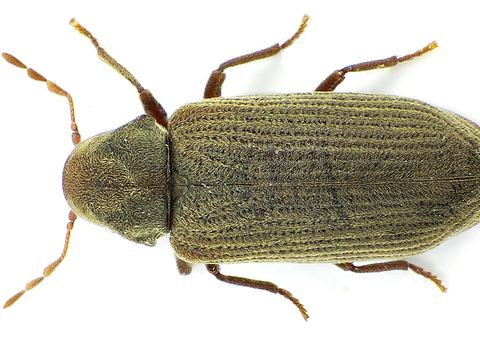
Settled.govt.nz, the government's home buying guide, gives the signs. You're looking for round or oval holes in the timber, borer dust below them, weak or creaking floorboards with crumbling corners and edges, and tunnels in the wood, which are hard to spot. In summer you may also find the small brown beetles near the holes, on windowsills and on affected timber.
Consumer NZ, writing in 2015, described active borer as flight holes of 2 to 4 mm with piles of fine sawdust. Larger, more oval holes, up to 7 mm, point to the two-toothed longhorn instead.
Holes by themselves don't tell you much. A hole with no fresh dust may be years old, which is why someone needs to look closely before you spend anything.
Mud in the timber isn't borer
If you find mud packed into gaps in timber, or mud tunnels up a wall or across open ground, don't disturb it. MPI lists those as signs of termites, and the call goes to MPI, not to a pest business. Our guide to termites in New Zealand explains why.
What's happening inside the timber?
The beetle isn't the real story. Its larvae are. They spend 2 to 4 years eating soft timber in floorboards, piles (the short posts that hold up a timber floor), weatherboards and furniture, then leave through small flight holes. So the hole you can see is where a beetle left, after years of feeding you couldn't see.
Settled says wooden structures and framing can become susceptible over time, and that can affect a home's structural integrity. Borer in a pile or a floor deserves a different conversation from borer in a bookcase.
Damp helps it along. Consumer NZ said borer prefer seasoned or moist untreated timber and soft sapwood, and that they're often found on the south side of buildings and in floor timbers, where damp collects.
What does a borer treatment involve?
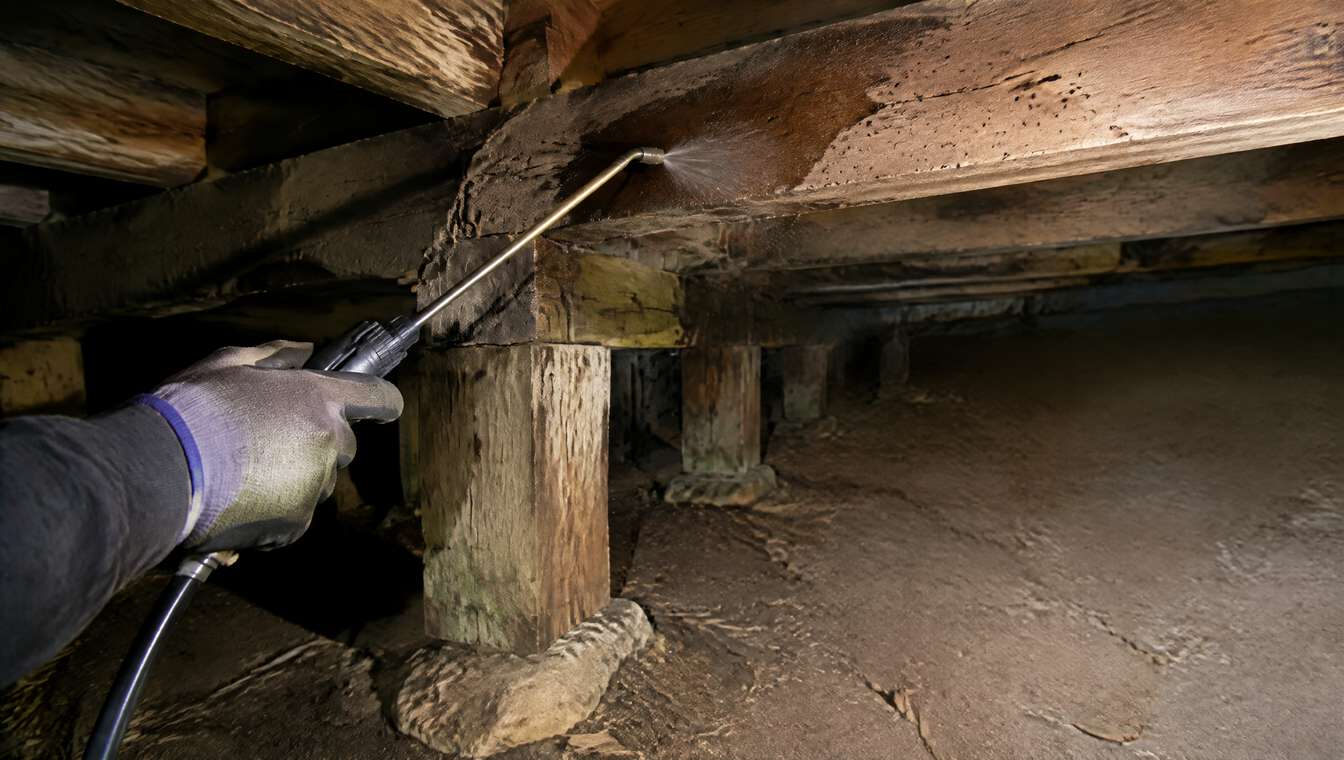
It starts with an inspection, usually under the floor and along the weatherboards. The technician is working out whether the borer is active, which timbers it's in, and whether they're still sound.
The long-term treatment Consumer NZ described in 2015 is a residual surface application: an insecticide or preservative that stays in the timber surface. It works on bare timber only, so paint or varnish may have to come off first. Bombs, misting and fogging reach only the adults in flight, the same article said, and won't stop larvae inside the wood. If a quote leans on fogging, ask what it's for.
Some timber is past treating. Consumer NZ said badly affected timber should be replaced, and that the long-term fix for weatherboards is new boards with the framing behind them treated. That part may be a builder's work, so ask who does it.
Furniture is its own small job. It can be fumigated or have its flight holes injected, though fumigation isn't usually suitable for houses or large areas.
What changes the size of the job
- How much timber is affected, and whether it's holding anything up.
- How easily someone can crawl through the subfloor.
- How much paint or varnish has to come off first.
- Whether boards or piles need replacing as well as treating.
- How damp and airless it is under the floor.
What you can check yourself
You can
- Look around with a torch for holes and dust, wherever you can reach easily.
- Photograph any holes with a coin beside them for scale.
- Keep the area under the floor well ventilated and dry.
- Note where beetles turn up in summer.
- Ask for borer to be included in any building inspection.
Leave to a pest business
- Working out whether it's active.
- Applying any residual treatment.
- Injecting or fumigating furniture.
- Large areas of borer, which Consumer NZ says should go to a professional.
Buying a house with borer
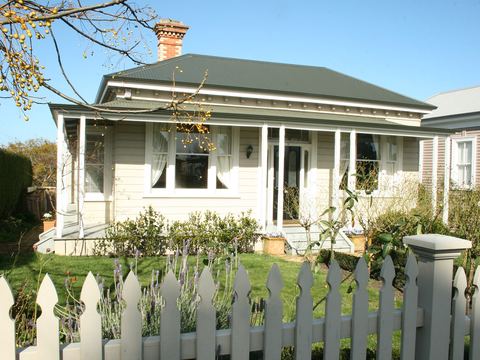
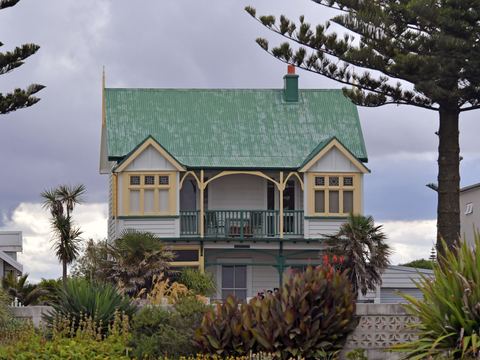
Older timber homes are the ones to watch, and a report can quietly leave borer out. Settled.govt.nz says to make sure a building inspection includes looking for it, because some building inspectors exclude liability for borer. It also recommends a full building report that meets NZS 4306:2005.
Read the exclusions before you rely on the report. If borer shows up, ask three plain questions: what's active, what's old, and what's structural. A pest business can help with the first two.
Before you say yes
- Is this borer active, and how can you tell?
- Which timbers are you treating, and which should be replaced?
- What's the product's full name, and can I have its safety data sheet?
- Does paint or varnish need to come off first, and who does that?
- What does any warranty cover, in writing?
- Will I get a record showing where the treatment went?

What we'd do before spending anything
We'd get the inspection done first, because old holes and active borer can look alike from a metre away. Take a few photos and tap Borer. If you're buying, we'd also ring the building inspector and ask in plain words whether borer is in or out of the report. It's a short call, and it's a good one to make before you sign.
Want someone to look at it?
Tell us what you've seen and your postcode, and a local pest business that handles exactly that calls you to talk it through.