If someone has been stung
Call 111 for signs of anaphylaxis, such as swelling around the lips and eyes, wheezing or a tight throat. For a honey bee sting, Health NZ says to scrape the stinger out quickly with your fingers, a credit card or the blunt side of a knife, wash with soap and cold water, then use an ice pack for 15 minutes. The National Poisons Centre on 0800 764 766 gives first aid advice.
Is it a swarm, or a colony in the building?
| A swarm | A colony in the building | |
|---|---|---|
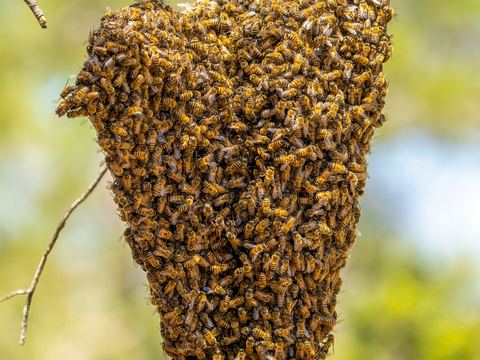
| What you see | A round cluster of bees on a branch, fence or post | A steady stream of bees using one gap in a wall, roof or chimney |
| What they're doing | Resting while they look for a new home | Living there, with comb and honey inside |
| Stinging | Apiculture New Zealand says they aren't inclined to sting unless provoked | They'll defend the colony if it's disturbed |
| Who to call | A beekeeper or swarm collector | A pest business, though some colonies may suit a beekeeper |
What should you do about a swarm?
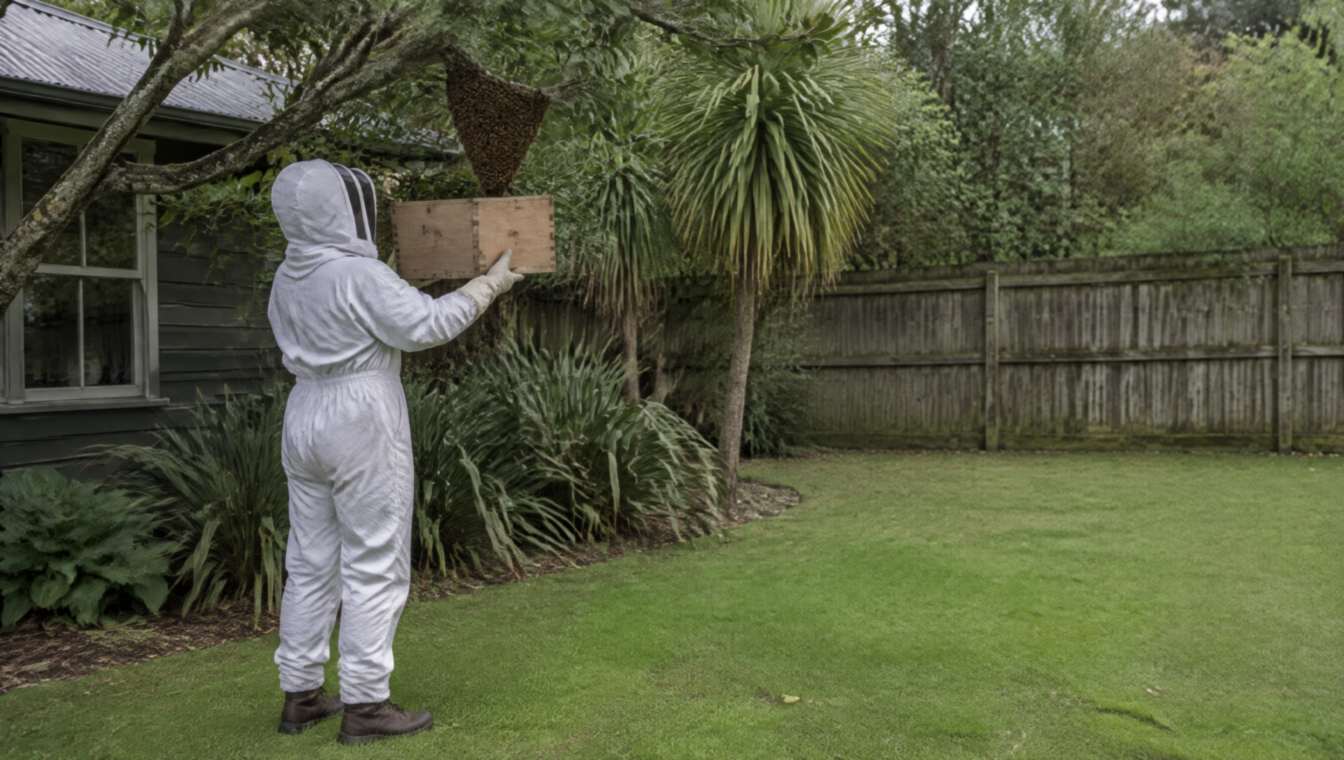
Leave it alone and call a beekeeper. Apiculture New Zealand lists trained swarm collectors by region, and says a collector can assess the swarm and take it away with no harm to the bees. Don't spray it, because insecticide can make the bees sick or worse.
Swarming is how honey bees reproduce, and the season can begin as early as August and run through to January. Our guide to bee swarms has more.
Local details vary. In Christchurch, the city council points people to the Christchurch Hobbyist Beekeepers' Club or a pest controller. Porirua City Council says owners are responsible for bee nests on private property, and that it deals with those in public places.
Are they actually bees?
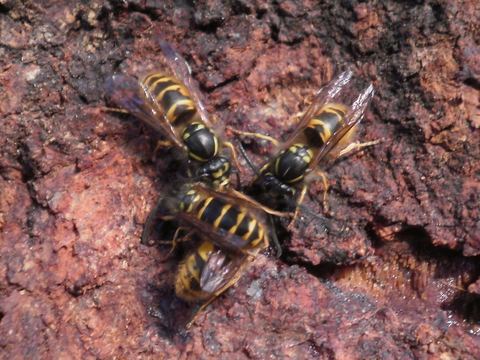
Check before you ring anyone, because Apiculture New Zealand says bees and wasps can look similar. Honey bees are brown and furry. Wasps are smooth and shiny in bright black and yellow, and a wasp nest goes straight to a pest business.
Big, round, fuzzy bees are probably bumble bees. They don't swarm, since Apiculture New Zealand says honey bees are the only bees that do. It also says beekeepers don't generally deal with bumble bee nests.
Why are bees in a wall a bigger job?
Once bees settle in a cavity, you've got a colony with comb, honey and young bees behind the lining, and a spray at the gap won't reach it. Two New Zealand reports show how that can go.
In 2023 the Gisborne Herald covered a wild hive in a second-storey wall of a Gisborne home. The bees had come in through the eave and been there for at least two years, and the beekeeper had to pull down the inside wall lining.
In 2020 the NZ Herald covered a Waikanae Beach home where bees got in around a pipe. The ceiling bulged with enough old hives and honeycomb to fill a wheelie bin.
What does the job usually involve?
The first visit works out where the colony sits and how far it spreads, from outside and in. Then comes the big question: can the bees be moved alive, or does the colony need treating? That depends on the spot. The Gisborne hive couldn't be relocated because of where it was.
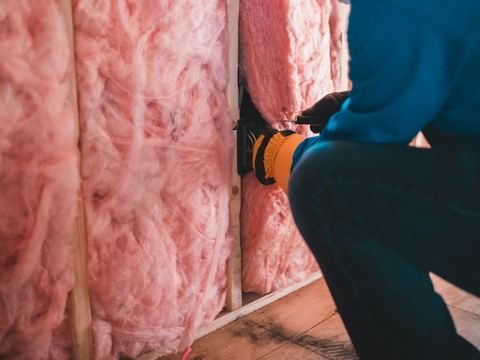
Either way, the comb has to come out. The Gisborne beekeeper said all the wax and honey had to go, otherwise other bees would smell it and set up home again. That usually means opening a lining or ceiling, closing the gap the bees used, and repairing what was opened.
What makes the job bigger or smaller is mostly height, access, how long the bees have been there and how much lining has to come off. Ask who does the repairs before you say yes.
What can you do today?
You can
- Keep kids and pets away from the gap.
- Shut windows near the entrance.
- Watch from well back to see where they go in.
- Take a photo from a distance.
- Tell the neighbours if it's near the boundary.
- Leave the gap as it is: stopping it up can push bees indoors.
Leave to a pest business
- Treating a colony in a wall, roof or chimney.
- Opening linings and taking out comb and honey.
- Closing the gap, once the colony has gone.
- Anything up a ladder.
What should you ask before anyone opens a wall?
- Can this colony be moved alive, or does it need treating?
- How will you reach the comb, and who repairs the lining afterwards?
- Will all the wax and honey come out?
- If you treat it, which product will you use, and how will other bees be kept away from it?
- Who closes the gap the bees were using?
- Is all of that in the written quote?

Our take on bee removal
We'd stand well back for five minutes and watch. Bees hanging in a clump mean a beekeeper. Bees filing in and out of a gap mean a job, so tell us that's what you're seeing. Either way, the can of spray stays in the shed: it won't fix a colony, and it's no help to a swarm.
Want someone to look at it?
Tell us what you've seen and your postcode, and a local pest business that handles exactly that calls you to talk it through.