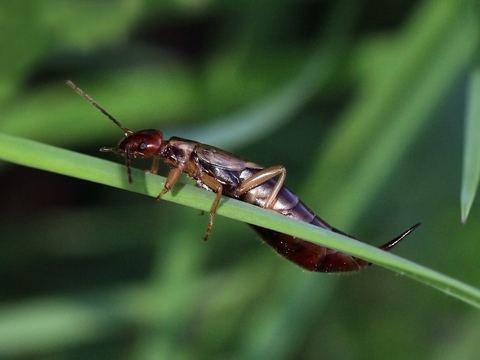
What does an earwig look like?
Look for the forceps. Earwigs have a long, slim body with a pair of pincer-like forceps at the tip of the abdomen. They can be yellow, brown, reddish brown, dark brown or black, and they range from 5 mm to 50 mm long across all species.
Females are usually smaller, with simpler forceps. Most people don't realise earwigs can have wings at all, because the large hindwings stay folded like a fan under short forewings.
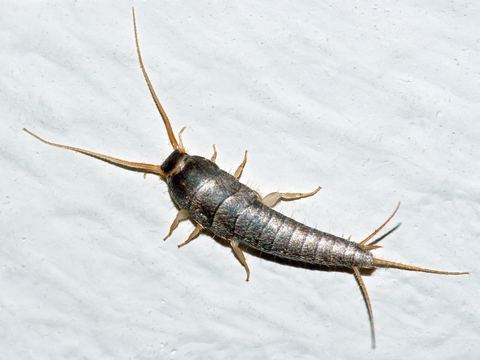
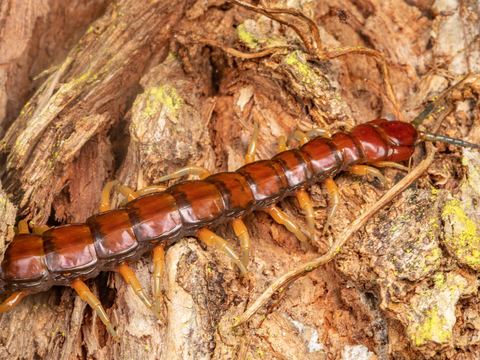
Earwig or something else?
| Earwig | Silverfish | Young cockroach | |
|---|---|---|---|
| Back end | A pair of pincers | Three thin tails | Two short stubs |
| Body | Slim and shiny | Teardrop, silvery | Flat and oval |
| Where you see it | Pots, mulch, outdoor furniture | Bathrooms, books, paper | Kitchens, behind appliances |
Is it native?
The one around your house is most likely the European earwig. A 2008 DOC report calls Forficula auricularia the introduced European earwig, and describes it as common on Chatham and Pitt Islands. We haven't read a source that maps it across the whole country, so we won't draw you a line.
Why do you find them where you do?
They want a moist, protected place by day. Under bark and stones, in leaf litter and between leaves are their natural spots, so pot saucers, hose reels, folded umbrellas and the gaps in outdoor furniture all suit them nicely.
They're usually out at night, and lights attract them. That's how one ends up on the laundry floor or inside the back door after a wet spell.
Friend or pest?
A bit of both. Earwigs eat a wide range of live and decaying plant and animal material, so soft seedlings and petals can get chewed. But Te Papa's insect curator wrote in 2019 that earwigs are fantastic to have in your garden if you struggle with aphids.
Te Papa even suggests building them a house: a flowerpot hung upside down in a tree, filled with straw or leaf litter. It works the other way too. Empty it away from your seedlings and you've moved them on.
Are they dangerous?
We've found no New Zealand health source treating earwigs as a risk. The forceps can give a small pinch if you handle one, and many species release a noxious fluid as a defence, so it's fair to leave them on the ground. The story about them crawling into ears isn't something we've seen any official source take seriously.
If they're annoying you
You can
- Clear pots, mulch and clutter away from doors.
- Seal gaps under doors and around pipes.
- Keep outdoor lights off or away from entrances at night.
- Shake out outdoor cushions and umbrellas before bringing them in.
- Protect seedlings until they're big enough to cope.
Leave to a pest business
- A general treatment, only if they're coming indoors in large numbers.
- Checking for damp that's drawing them in.

Honestly?
We'd leave them alone. An earwig on the deck isn't a job, and in a garden with aphids it's on your side. If they're getting indoors in numbers, look at the damp and clutter beside your doors first. Still stuck? Tap Not sure what it is and tell them where you're finding them.
Want someone to look at it?
Tell us what you've seen and your postcode, and a local pest business that handles exactly that calls you to talk it through.